

Table of Contents
- How a Weighted Blanket Improves Sleep Quality
- What the Research Actually Shows
- How to Choose the Right Weighted Blanket Weight
- Cooling Weighted Blankets for Hot Sleepers
- Weighted Blanket Safety Guidelines
- Weighted Blanket Sleep Benefits and Drawbacks
- Care, Durability, and Getting the Most From Your Blanket
- Conclusion
- Frequently Asked Questions
Last Updated: September 1, 2026
How a Weighted Blanket Improves Sleep Quality
A weighted blanket for better sleep quality works through deep pressure stimulation, a mechanism that triggers a physiological shift from alertness to calm. At Mosaic Weighted Blankets, we've spent over a decade helping more than 58,000 sleepers understand this connection. Below, we'll break down how this works at the neurological level, what research supports, and how to choose the right blanket for your situation.
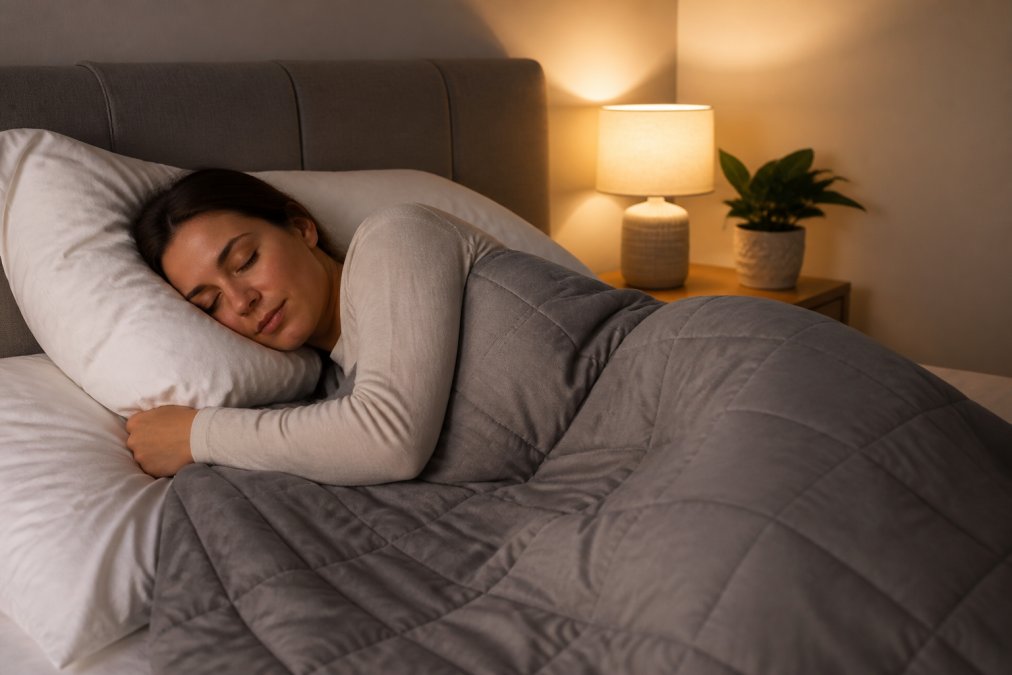
Deep Pressure Stimulation and the Parasympathetic Nervous System
Deep pressure stimulation is firm, distributed tactile input that activates the parasympathetic nervous system and reduces physiological arousal. The body interprets sustained pressure as a signal of safety, dialing down the fight-or-flight response.
When the parasympathetic nervous system activates, heart rate slows, breathing deepens, and cortisol levels drop. For people whose nervous systems are chronically dysregulated by stress, anxiety, or sensory processing disorder, a weighted blanket creates the proprioceptive input that prompts this shift. This calming effect is a documented neurological process, not placebo.
Effects on Cortisol, Melatonin, and Sleep Architecture
Cortisol and melatonin operate in opposition. When cortisol remains elevated at night, melatonin production is suppressed, sleep latency increases, and sleep architecture suffers. Weighted blankets reduce the physiological stress response before and during sleep, resulting in faster sleep onset, fewer nocturnal awakenings, and more time in deeper sleep stages.
What the Research Actually Shows
The evidence base for weighted blankets is real but nuanced. A fair assessment requires separating what research confirms from where it's still developing.
Where the Evidence Is Strong
The strongest evidence centers on anxiety reduction and sensory processing. Research published in occupational therapy and psychiatric journals consistently finds that deep pressure stimulation reduces self-reported anxiety and physiological stress markers. According to research summaries on deep pressure therapy published by the American Occupational Therapy Association, proprioceptive input through weighted products is a well-established therapeutic tool for sensory regulation.
For people with sensory processing disorder, autism spectrum conditions, or anxiety-related insomnia, the evidence is particularly consistent. Sleep maintenance also shows positive results, with many users reporting fewer nocturnal awakenings and greater sleep continuity.
Where Results Are Mixed, and Why
Randomized controlled trial data on weighted blankets remains limited. Most studies involve small sample sizes, short durations, and self-reported outcomes rather than objective polysomnography data. Individual variability also matters: body weight, baseline anxiety, sleep environment, and temperature sensitivity all influence outcomes.
The takeaway: weighted blankets are not a guaranteed cure for insomnia, but for the right user, they're one of the most evidence-aligned non-pharmacological sleep interventions available.
How to Choose the Right Weighted Blanket Weight
Choosing the right weight is the single most important decision you'll make. Getting it wrong explains most cases where weighted blankets "didn't work."
Body Mass Percentage Calculator Method
The standard recommendation is a blanket weighing approximately 10% of your body weight. This threshold reflects when deep pressure stimulation becomes therapeutically effective without creating discomfort.
| Body Weight | Recommended Blanket Weight |
|---|---|
| 100-130 lbs | 10-12 lbs |
| 130-160 lbs | 12-15 lbs |
| 160-200 lbs | 15-20 lbs |
| 200-240 lbs | 20-25 lbs |
| 240+ lbs | 25 lbs or custom |
A common mistake is choosing heavier weight assuming more pressure equals more benefit. Too much weight activates the body's stress response rather than suppressing it. If you're between sizes, start lighter.
Fill Material: Glass Beads vs. Plastic Pellets
Glass beads are smaller and denser, distributing more evenly across the blanket's surface. They create a smoother drape that conforms to body contours, improving proprioceptive input quality. They're also quieter and stay in place better.
Plastic pellets are larger and lighter per unit volume, requiring more material to achieve the same weight. This can create uneven distribution that shifts during the night. Construction quality matters enormously: tightly stitched, smaller pocket squares prevent fill migration.
Cooling Weighted Blankets for Hot Sleepers
Heat is the single biggest complaint about weighted blankets, but it's solvable with the right materials.
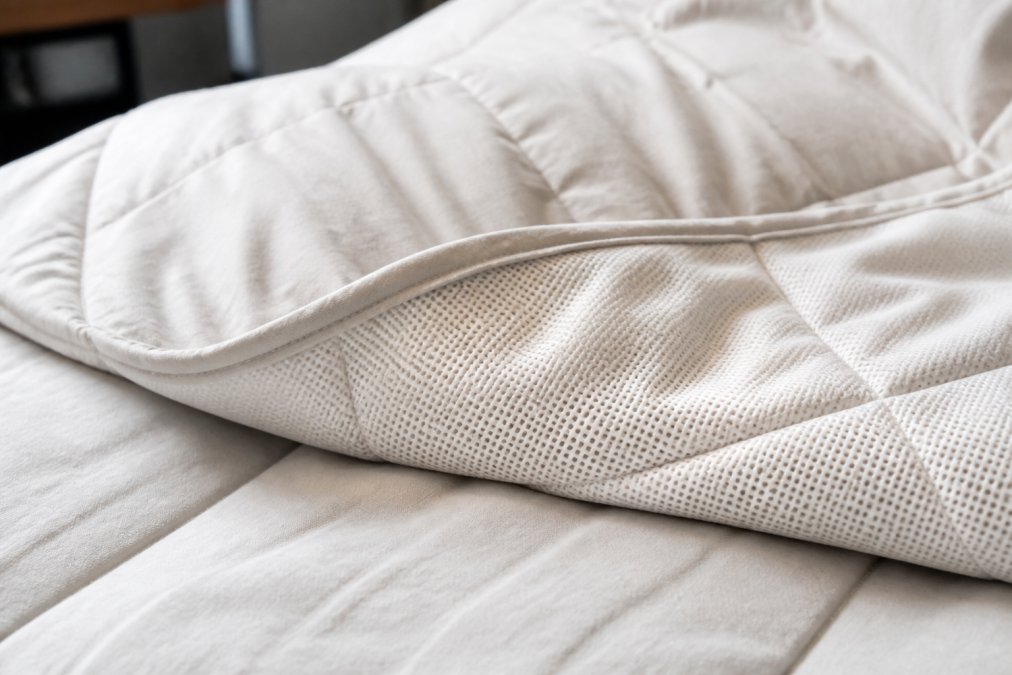
Fabric Choices That Regulate Temperature
Thermal comfort depends on fabric breathability, moisture-wicking capacity, and weight distribution.
Cotton breathes well and wicks moisture adequately, making it a solid baseline choice. For hot sleepers or those with night sweats, it often isn't enough.
COOLMAX® fabric is engineered for thermal regulation. Its fiber structure actively moves moisture away from skin and accelerates evaporation, keeping the sleep surface cooler throughout the night. According to sleep temperature research from the National Sleep Foundation, thermal comfort is one of the most significant environmental factors affecting sleep quality.
Minky fabric, while exceptionally soft, retains heat. It's ideal for cooler climates or people who run cold, but wrong for those concerned about overheating.
Long-Term Habituation: Does the Calming Effect Fade?
Deep pressure stimulation works through the autonomic nervous system, not through novelty. Unlike sleep aids requiring dose escalation, proprioceptive input continues to engage the parasympathetic nervous system as long as pressure is present. What changes is conscious awareness of the blanket, it becomes part of your normal sleep environment.
Weighted Blanket Safety Guidelines
Weighted blankets are safe for most adults, but specific populations require caution.
Who Should Avoid Weighted Blankets
Weighted blankets are not appropriate for:
- People with respiratory conditions such as asthma, COPD, or sleep apnea
- Individuals with claustrophobia
- People with circulatory conditions or chronic pain affecting pressure sensitivity
- Anyone unable to independently remove the blanket
As documented in occupational therapy safety guidelines for sensory tools, clinical use of weighted products always begins with individual assessment.
Safe Use for Children and Older Adults
Children under 2 years old should never use weighted blankets. For children ages 2 and older, the 10% body weight guideline applies with conservative upper limits, and the child must remove the blanket independently.
For older adults, primary considerations are mobility and respiratory function. Many benefit significantly from weighted blankets for anxiety and sleep maintenance.
Weighted Blanket Sleep Benefits and Drawbacks
| Benefit | Consideration |
|---|---|
| Reduces anxiety and physiological arousal | Effect size varies by individual |
| Improves sleep latency for many users | Not effective for all insomnia types |
| Supports sensory regulation | Wrong weight worsens outcomes |
| Non-pharmacological, no dependency risk | Requires correct material for hot sleepers |
| Sustained benefit over long-term use | Initial cost higher than standard blankets |
| Hypoallergenic options available | Heavier blankets require machine-rated washers |
A weighted blanket works best as part of a broader sleep hygiene approach. It's not a standalone cure for chronic insomnia, but one of the most evidence-aligned non-pharmacological tools, particularly for anxiety-driven sleep disruption.
Care, Durability, and Getting the Most From Your Blanket
How you care for your weighted blanket determines whether it performs for years or deteriorates within months.
The most common durability failure is fill migration, where beads or pellets shift and clump unevenly. This is almost always a construction problem. Blankets with small, tightly stitched pocket squares resist fill migration through repeated washing.
For washing, most weighted blankets rated for home machines handle a standard large-capacity washer on gentle cycle. Blankets over 15 lbs often require commercial-capacity machines. Always check manufacturer care instructions before the first wash.
Drying on low heat with dryer balls helps redistribute fill and prevents clumping. According to textile care and durability guidance from the American Cleaning Institute, proper washing technique for weighted bedding significantly extends product lifespan and maintains structural integrity.
Conclusion
Choosing a weighted blanket for better sleep quality requires matching the blanket to your specific physiology and sleep environment. The wrong weight, fabric, or construction will undermine the mechanism you're trying to activate.
Mosaic Weighted Blankets has been handcrafting weighted blankets in Texas since 2013, with options spanning cotton, minky, and COOLMAX® cooling styles, including hospital-grade antimicrobial options for clinical settings. With over 58,000 customers and more than a decade of refinement, the quality difference shows in construction details that matter most. Shop Mosaic Weighted Blankets and find the right weight, fabric, and style for deeper, calmer sleep.
Frequently Asked Questions
Is it okay to sleep all night with a weighted blanket?
For most healthy adults, sleeping through the night under a weighted blanket is safe and often beneficial. The therapeutic pressure can reduce nocturnal awakenings and support deeper, more restorative sleep. The main exception is if you feel overheated or restricted, in that case, a lighter weight or a cooling fabric option resolves the issue. Anyone with respiratory conditions, circulatory disorders, or claustrophobia should check with a doctor before using one overnight.
How does deep pressure stimulation affect sleep quality?
Deep pressure stimulation activates the parasympathetic nervous system, shifting the body from a stress response toward a calmer state. This can lower cortisol levels, support melatonin production, and reduce sleep latency, the time it takes to fall asleep. Proprioceptive input from the blanket's weight also grounds restless body movement, which is why many users with anxiety or sensory processing disorder report fewer nocturnal awakenings and improved overall sleep efficiency.
Which is better, a 15 lb or 20 lb weighted blanket?
The right weight depends on your body mass. A common guideline is 10% of your body weight, so a 150 lb adult would start with a 15 lb blanket, while a 200 lb adult may find 20 lbs more effective. If you are new to weighted blankets, starting at the lower end of that range lets your body adjust. Heavier is not automatically better, too much weight can feel restrictive rather than calming and may disrupt sleep rather than improve it.
What are the downsides of using a weighted blanket?
The most common complaints are overheating, especially from blankets made with non-breathable fill or fabric, and bead shifting that creates uneven weight distribution over time. Some users also find the added weight difficult to manage when getting in and out of bed. Weighted blankets are not suitable for infants, young toddlers, or anyone with conditions that limit their ability to remove the blanket independently. Choosing the right weight, fill material, and fabric largely prevents these issues.


