

Last Updated: November 20, 2026
Quick Summary
The best alternatives to heavy winter bedding are thin, breathable layers instead of one thick comforter: an open-weave cotton or linen base, a lightweight wool or woven cotton mid layer, and a light quilt or low-fill duvet on top. Choose high fill power over fill volume, and add a cooling weighted blanket if you want pressure without heat.
- Higher fill power traps more air with less fill, so a comforter feels lighter while sleeping just as warm.
- A three-layer system lets you remove the top layer when the room warms instead of stripping the whole bed.
- The COOLMAX cooling weighted blanket comes in Twin 15 lbs, Full/Queen 20 lbs, and King/Cal-King 25 lbs at $149.95.
- The general rule for weighted blankets is roughly 10% of body weight.
- A $250 wool blanket lasting a decade can cost less per winter than a $100 down-alternative replaced every three years.
Table of Contents
- Why Heavy Winter Bedding Fails Hot Sleepers
- Lightweight Warm Bedding: How to Read Warmth Without the Weight
- Breathable Winter Bedding: Fabrics That Move Heat and Moisture
- Layering Blankets for Warmth: A Three-Layer System That Won't Bury You
- Cooling Weighted Blankets for Hot Sleepers: Pressure Without the Heat
- Comparing the Options: Warmth, Weight, Breathability, and Cost
- Match Your Bedding to How You Sleep and Your Room
- Build Your Lighter Winter Bed at Mosaic Weighted Blankets
- Frequently Asked Questions
Why Heavy Winter Bedding Fails Hot Sleepers
A 2024 review in a National Institutes of Health journal found that fiber choice measurably affects sleep quality, with wool sleepwear helping sleep onset in cool conditions and linen sheets improving sleep quality under the conditions studied (review of sleepwear and bedding fiber research(https://pmc.ncbi.nlm.nih.gov/articles/PMC11596996/)). That finding matters because most people treat heavy winter bedding as a weight problem. It is actually a heat-trapping problem.
Here is the trap. A thick down comforter plus flannel sheets plus a quilt holds warmth in, and it also holds moisture in. You wake at 2 a.m. clammy, kick everything off, then get cold twenty minutes later. The cycle repeats.
At Mosaic Weighted Blankets, we hear this from customers constantly: they want the cozy feeling of a winter bed without the overheating that comes with it. Below, we break down seven lighter routes to a warm bed, including the fabrics, the layering math, and the options that actually breathe.
Lightweight Warm Bedding: How to Read Warmth Without the Weight
Lightweight warm bedding is bedding that delivers insulation through trapped air and fiber quality rather than sheer mass. A high fill-power comforter traps more air with less fill, so it feels lighter while sleeping just as warm (Comforter Warmth, Fill Power, and Weight).
The Company Store explains the mechanics well: higher fill power makes a comforter lighter and loftier, while lower fill power needs more fill for the same warmth and ends up heavier (EXTERNAL_LINK: comforter warmth and fill power guide | thecompanystore.com). That single principle reshapes how you shop.
Three numbers to check before buying:
- Fill power on down and down-alternative: higher means more loft per ounce
- GSM on blankets: the weight of the fabric itself, not the fill
- Thread count on sheets: past a point, denser weaves trap more heat
A 300-thread-count sateen breathes differently than a 600-count hotel weave. Neither is "better." They suit different sleepers.
Breathable Winter Bedding: Fabrics That Move Heat and Moisture
Breathable winter bedding moves moisture vapor away from your skin instead of sealing it in. The fabric matters more than the tog rating, because a damp layer chills you the moment your body temperature dips.
Which fabrics actually move moisture?
- Cotton and cotton sateen: breathable, washable, and cool to the touch. Our organic cotton sateen sheets are made from 100% GOTS-certified organic cotton and are described as hypoallergenic, with a sateen weave that is breathable year-round.
- Linen: breathable and light, with a cool feel. It gets softer with washing and wrinkles readily.
- Wool: naturally temperature-regulating and moisture-wicking.
- COOLMAX® blends: engineered polyester fibers that transport moisture away and let heat dissipate. Our Coolmax duvet cover is a 65% cotton, 35% COOLMAX® blend that wicks and dries fast.
- Bamboo rayon, silk, jersey knit: soft and light, but check the weave. A tight bamboo sateen can sleep warmer than an open cotton percale.
Watch out: "breathable" on a label is marketing until you check the construction. A breathable fiber woven into a dense, coated shell still traps heat.
Layering Blankets for Warmth: A Three-Layer System That Won't Bury You
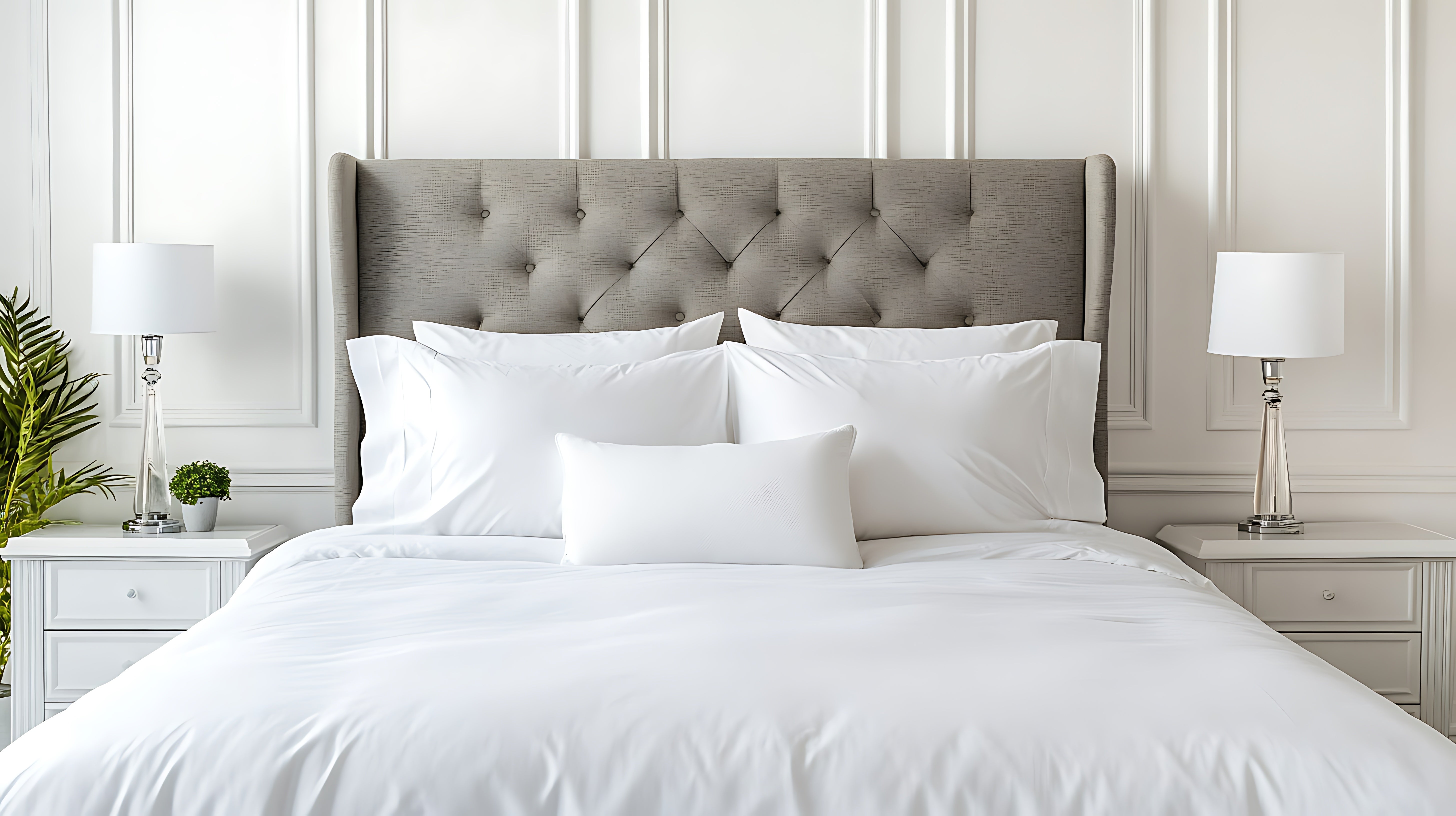
Layering blankets for warmth works best as three thin layers instead of one thick one, so you can shed heat without stripping the bed. Each layer does a different job, and you remove one at a time as the night warms. The approach also opens up non-comforter alternatives, quilts, coverlets, woven blankets, and sheet combinations, that most winter bedding guides skip entirely.
| Layer | What It Does | Non-Comforter Options | Example | Weight Feel |
|---|---|---|---|---|
| Base | Wicks moisture off skin | Cotton percale, linen, cotton sateen sheets | Open-weave cotton sheets | Lightest |
| Mid | Traps air, adds warmth | Woven cotton blanket, lightweight wool blanket, quilted coverlet | Cotton waffle-weave blanket | Light |
| Top | Seals in warmth, easy to kick off | Lightweight quilt, coverlet, down-alternative comforter, duvet with light insert | Lightweight quilt or low-fill duvet | Medium |
The advantage over a single heavy comforter is control. Sleep Number describes lighter bedding as an alternative to heavier blankets and comforters for exactly this reason: you get coverage without a fixed wall of insulation (EXTERNAL_LINK: Sleep Number on lighter bedding options | sleepnumber.com).
How the layers actually behave at night:
- Base layer: choose an open weave so moisture vapor can pass. Percale and linen breathe better than sateen, which has a denser weave and sleeps warmer.
- Mid layer: a woven cotton blanket or lightweight wool blanket traps air without much weight. A quilted coverlet does the same job with a little more structure.
- Top layer: a lightweight quilt or a low-fill duvet is easy to push to the foot of the bed. A heavy comforter is not.
A common pattern is to start with all three layers on a cold night, then remove the top layer when the room warms and the mid layer if you still wake warm. Because each layer is thin, removing one does not leave you uncovered.
Watch out: a dense sateen base layer under a wool mid layer can trap moisture even when each piece is marketed as breathable, so match an open-weave base to a heavier mid layer rather than stacking two tight weaves.
Cooling Weighted Blankets for Hot Sleepers: Pressure Without the Heat
Cooling weighted blankets for hot sleepers pair moisture-wicking covers with evenly distributed glass-bead fill, so you get deep-touch pressure without the heat buildup of a standard weighted blanket.
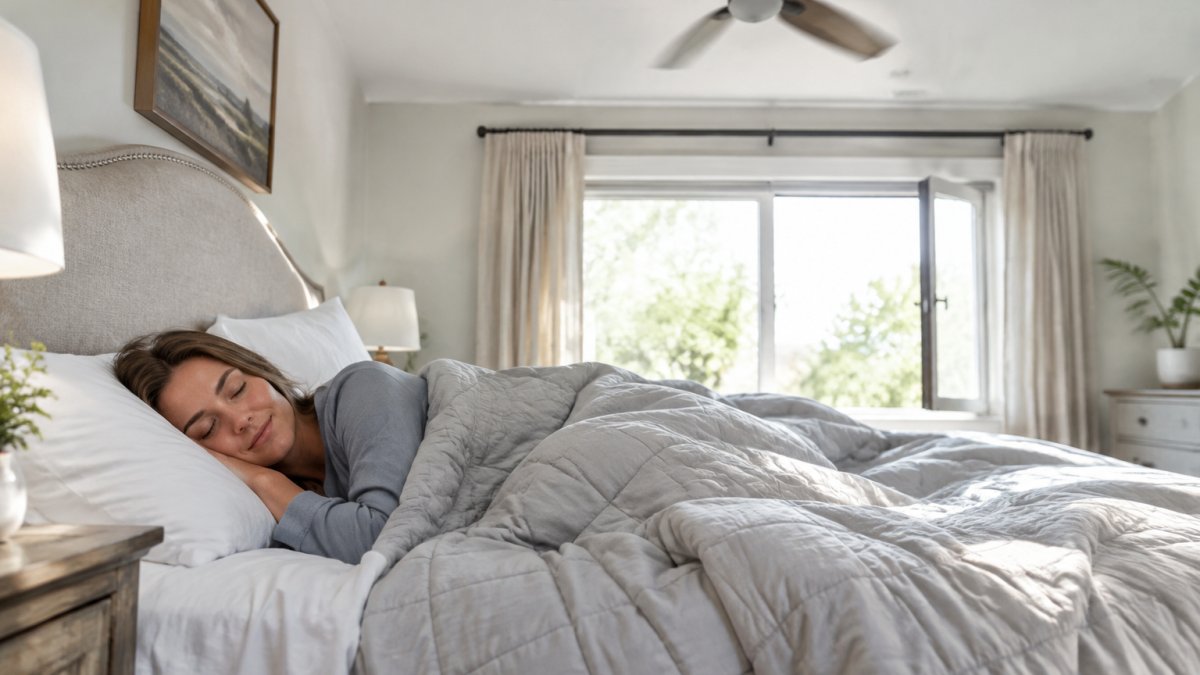
Our COOLMAX® cooling weighted blanket uses a COOLMAX® high-moisture-management fiber cover over hypoallergenic glass beads held in quilted pockets. It comes in Twin at 15 lbs, Full/Queen at 20 lbs, and King/Cal-King at 25 lbs, at $149.95.
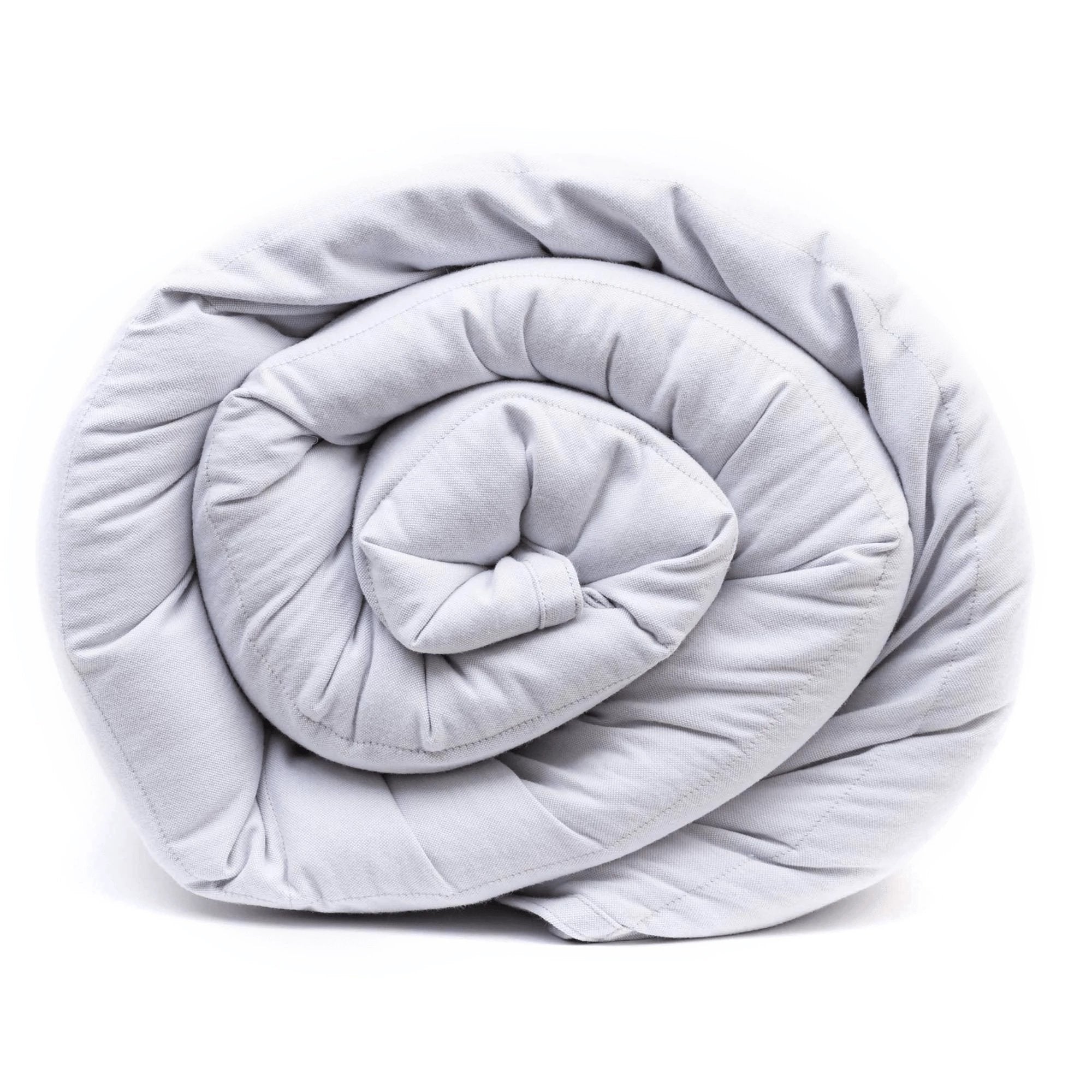
Best for: hot sleepers who want pressure but have been burned by sweaty blankets before. Skip if: you want maximum loft and a puffy, cloud-like feel; a weighted blanket hugs rather than puffs.
If you are comparing cooling styles, you can browse the full cooling blanket collection to see the options side by side.
Comparing the Options: Warmth, Weight, Breathability, and Cost
The right choice depends on which of the three you can least afford to sacrifice. Here is how the main alternatives stack up, including care and durability so you can judge total cost rather than sticker price alone.
| Option | Warmth | Weight | Breathability | Typical Cost | Care | Expected Longevity |
|---|---|---|---|---|---|---|
| Down comforter, high fill power | High | Low | Moderate | $200+ | Professional or gentle home wash; slow to dry | 10+ years with care |
| Down-alternative comforter | Medium-high | Medium | Moderate | $80-$200 | Machine washable; clumps if overdried | 3-5 years |
| Wool blanket | Medium-high | Medium | High | $100-$250 | Spot clean or dry clean; air regularly | 10+ years |
| Cotton flannel sheets | Medium | Light | Low-medium | $60-$150 | Machine wash; pills with heavy use | 2-3 years |
| Linen sheets | Low-medium | Light | High | $100-$300 | Machine wash; softens with use | 5-10 years |
| Woven cotton blanket | Medium | Light | High | $50-$120 | Machine wash and dry | 5+ years |
| Cooling weighted blanket | Medium | Medium-heavy | High | $149.95 | Cover machine washable; spot clean fill | 5+ years |
Down and down-alternative comforters win on warmth-to-weight, but both can sleep hot because they trap air and moisture together. Wool is generally described as regulating temperature well.
The contrarian point: a lighter-feeling comforter can still be genuinely warm. Reducing weight does not mean choosing less insulation, provided you buy fill power instead of fill volume.
Total cost matters as much as initial price. A $250 wool blanket that lasts a decade can cost less per winter than a $100 down-alternative comforter replaced every three years.
Watch out: down and down-alternative can trigger reactions in allergy-prone sleepers. Wool and cotton are the safer routes if you react to feather or synthetic fill, and both hold up well to repeated washing when cared for as labeled.
Typical cost of winter bedding alternatives
Match Your Bedding to How You Sleep and Your Room
Room climate decides as much as your body does. A 68°F bedroom with forced-air heat calls for a different stack than a drafty 60°F room, and a partner who runs cold changes the math entirely.
Use this as a starting framework:
- You run hot, room is warm: linen or cotton sateen base, woven cotton mid layer, no top layer or a light duvet cover only
- You run hot, room is cold: cotton base, lightweight wool mid layer, cooling weighted blanket on top
- You run cold, room is cold: flannel or jersey base, wool mid layer, down-alternative top layer
- You share a bed with opposite sleepers: two separate top layers, one shared breathable base
Material sensitivities belong in the decision too. GOTS-certified organic cotton and wool resist dust mites and mildew naturally, which matters for sensitive sleepers. Our organic wool mattress topper is chemical-free and temperature-regulating, and it adds warmth without a heavy comforter above it.
Build Your Lighter Winter Bed at Mosaic Weighted Blankets
The challenge is real: you want to stay warm through a cold night without waking up overheated at 2 a.m. Solving it means choosing breathable layers, reading fill power instead of weight, and picking the right top layer for how you actually sleep.
That is where we come in. Mosaic Weighted Blankets has handmade weighted blankets in Texas since 2013, trusted by more than 58,000 sleepers worldwide. Our COOLMAX® cooling styles wick moisture and dissipate heat, our glass-bead fill stays evenly distributed through quilted pockets, and our organic cotton bedding gives you a breathable base layer to build on.
Get started with Mosaic Weighted Blankets and build a winter bed that keeps you warm without the sweat. You can browse the full Coolmax collection to find your fit.
Start with one layer you can remove without waking your partner, and add from there. The goal is not the heaviest bed in the house. It is the one you stop fighting at 2 a.m.
Frequently Asked Questions
How can I stay warm at night without a heavy comforter?
Focus on warmth per unit of weight rather than total bulk. A lightweight down or down-alternative comforter with a high fill power traps more air at a lower weight, and a breathable cotton or linen base layer moves moisture away so you do not wake up clammy. Add a thin wool or cotton blanket on top when temperatures drop, and keep the room around 65°F to 68°F. The goal is trapping warm air, not stacking pounds of fabric on your body.
What bedding is warm but breathable?
Wool, cotton sateen, linen, and high-fill-power down or down alternative all combine warmth with airflow. Look for breathable winter bedding with natural fibers and a visible weave or quilting pattern that lets air circulate. Avoid non-breathable synthetic covers directly against the skin.
Can layering blankets keep you warm without a bulky comforter?
Yes. Layering blankets for warmth works because each thin layer traps a pocket of air, and you can remove one layer without stripping the whole bed. Start with breathable sheets, add a lightweight cotton or wool blanket, then top with a thin quilt or duvet. This gives you adjustable warmth through the night and makes it easy to accommodate a partner who sleeps at a different temperature. Choose layers that are individually washable.
Are cooling weighted blankets a good alternative for hot sleepers?
Cooling weighted blankets for hot sleepers combine gentle pressure with moisture-wicking fabric. The Mosaic COOLMAX® Cooling Weighted Blanket, $149.95, uses a COOLMAX® fiber cover and a hypoallergenic glass-bead fill distributed in quilted pockets. It comes in Twin (15 lbs), Full/Queen (20 lbs), and King/Cal-King (25 lbs), with a general guideline of about 10% of body weight. Follow the care instructions for the cover and spot clean the fill.
Are wool blankets a good alternative to a winter comforter?
Wool is often described as a natural temperature regulator. A thin wool blanket layered over cotton sheets is one option for a lighter bed. The Mosaic Organic Wool Mattress Topper, $591.00, uses organic wool in an organic cotton twill case for similar breathable warmth directly under the sheets.


