

Last Updated: October 24, 2026
Quick Summary
Wash and dry your heavy king size blanket completely, then fold it in thirds twice on a flat surface and store it in a breathable cotton or canvas bag with a zipper. Keep the bag in a cool, dark, dry spot off concrete floors, and air the blanket out once a season.
- A weighted king size blanket can weigh 15 to 20 pounds, so lift with your knees.
- A 76 by 80 inch blanket folded in thirds twice measures about 25 by 27 inches.
- Skip airtight plastic bags for long-term storage because they trap moisture and cause mildew.
- Never vacuum-seal a down or wool blanket, since compression crushes loft.
- Store bags in a dark closet and keep them off bare concrete floors.
Table of Contents
- Step 1: Wash and Dry the Blanket Before It Goes Away
- Step 2: Fold or Roll a Heavy King Size Blanket Solo
- Step 3: Lift and Carry It Without Straining Your Back
- Step 4: Pick the Right Container for How to Store Comforters and Blankets
- Step 5: Choose Blanket Storage Bags With Zipper That Breathe
- Step 6: How to Store Blankets in a Small Space
- Step 7: How to Keep Blankets Fresh in Storage
- Match the Storage Method to Your Blanket's Material
- Frequently Asked Questions
Step 1: Wash and Dry the Blanket Before It Goes Away
A heavy king size blanket collects body oils, sweat, and dust all season. Storing it dirty invites stains and odors that set in over months. Wash it first, and it comes out fresh.
Check the care label before anything else. Most cotton and synthetic weighted blankets handle a gentle cycle in cold water. Down comforters and wool blankets need different care, which we cover below.
Dry the blanket completely. Any trapped moisture can turn into mildew in a sealed bag. Tumble dry on low with dryer balls, or air dry flat on a clean sheet. Feel the center and seams before you fold. If it feels cool or damp, give it more time.
- Use cold water and a mild detergent
- Skip fabric softener, which coats fibers
- Run an extra rinse if the blanket is thick
- Dry fully, then let it air out an hour
A common mistake is folding a blanket while it is still warm from the dryer. Trapped warmth plus a storage bag equals condensation. Let it cool and breathe first.
Step 2: Fold or Roll a Heavy King Size Blanket Solo
Folding a king size blanket alone is a wrestling match. The trick is to work in thirds on a flat surface, not to lift the whole thing at once.
Lay the blanket across the bed. Fold one long side toward the center, then the other side over it. You now have a long strip. Fold that strip in thirds from the bottom up. The folded edge faces you, which makes the bundle easier to pick up.
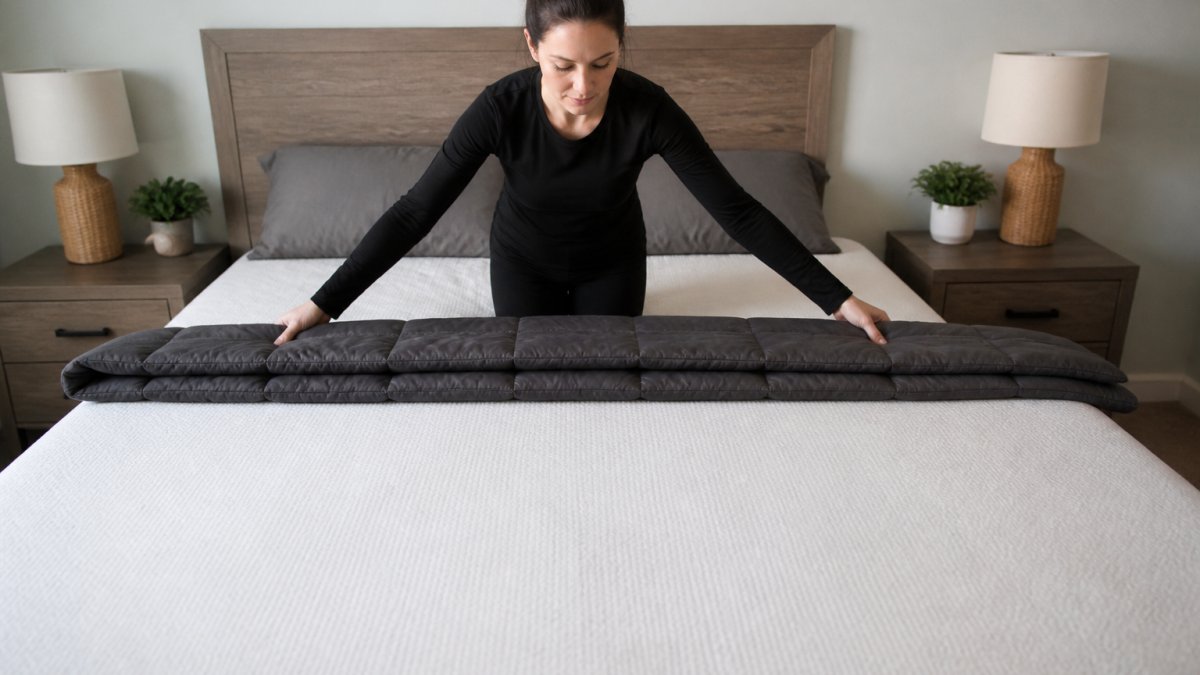
Rolling works better for some blankets. Start at one end and roll tightly, pressing out air as you go. A rolled blanket holds its shape and slides into round bins or bags with less fuss. It also spreads weight evenly when you lift it.
- Fold in thirds, then thirds again
- Roll from the short end for a compact cylinder
- Keep the heavy edge toward your body
- Never drag a weighted blanket across the floor
Step 3: Lift and Carry It Without Straining Your Back
A weighted king size blanket can weigh 15 to 20 pounds. That is enough to tweak your back if you lift it wrong.
Stand close to the blanket with your feet apart. Bend at the knees, not the waist. Hug the bundle to your chest and keep it tight. Stand up using your legs, and keep the load close as you walk. Never twist while holding it.
- Bend your knees, not your spine
- Hold the bundle against your body
- Turn with your feet, not your torso
- Set it down with the same knee bend
If lifting is hard on your body, ask for help or slide the blanket onto a rolling cart. There is no prize for doing it alone. A cart also saves your back on the trip to the closet.
Step 4: Pick the Right Container for How to Store Comforters and Blankets
The right container depends on where it goes and how often you use the blanket. Here is how to store comforters and blankets without guessing.
Start with the folded bundle, not the product page. A king size blanket at 76 by 80 inches, folded in thirds and then in thirds again, lands at roughly 25 by 27 inches and 8 to 12 inches tall depending on loft.
| Container | Typical Dimensions | Best For | Watch Out For |
|---|---|---|---|
| Breathable cotton bag | 26 by 28 by 12 in | Long-term storage | Little crush protection |
| Zippered fabric bag | 28 by 30 by 12 in | Dust-free closet storage | Must be breathable fabric |
| Plastic bin with lid | 30 by 18 by 12 in | Under-bed and shelf storage | Traps moisture if sealed tight |
| Wicker basket | 20 by 20 by 16 in | Everyday access | Dust and light get in |
| Storage chest or trunk | 36 by 18 by 18 in | Bedroom display and storage | Can hold stale air |
Match the container to the space. Under-bed storage calls for low, flat bins with wheels; measure the clearance under the frame first, because a king bed with a skirt or a low profile frame may leave only 6 to 8 inches.
Capacity matters as much as footprint. A single king size blanket at 15 to 20 pounds fills one 30-gallon bin or one large cotton bag.
If you are shopping for the blanket itself, our solid cotton weighted blanket comes in a king size at 76 by 80 inches, in weights of 15 and 20 pounds.
Solid Cotton Weighted Blanket →

Step 5: Choose Blanket Storage Bags With Zipper That Breathe
Blanket storage bags with zipper keep dust and pests out. But the fabric matters more than the zipper. Choose cotton, canvas, or another breathable material so trapped air can escape.
Skip airtight plastic bags for long-term storage. They seal in any moisture left in the fibers, and that moisture turns into mildew. Breathable bags let the blanket settle without trapping damp air.
- Cotton or canvas bags breathe best
- Look for a full-length zipper for easy loading
- Add a cedar block or lavender sachet for pests
- Label the bag with the blanket size and date
One contrarian note: vacuum-sealed bags save space, but they are not for every blanket. Compression can crush the loft of a down comforter or a wool blanket and leave it flat. For oversized blankets, StorageCafe's blanket storage guide suggests storing them loosely in a large breathable bag or wrapping them in a clean cotton sheet instead.
Step 6: How to Store Blankets in a Small Space
Small spaces need vertical thinking. Here is how to store blankets in a small space without turning the bedroom into a pile.
Use under-bed storage first. Flat bins on wheels slide under a king bed and hold a folded comforter out of sight. Next, look at the top shelf of the closet. Stack breathable bags there, with the heaviest on the bottom.
- Under-bed bins with wheels
- Top closet shelf with labeled bags
- A storage ladder in a corner
- Rolling carts tucked beside the dresser
- A storage chest that doubles as seating
A storage ladder is a simple wooden rack that holds rolled blankets in plain view. It works in a guest room or living room and keeps blankets reachable. For deeper closet tips, The Spruce's closet organization guidance covers shelf and bin layouts that fit tight spaces.
Step 7: How to Keep Blankets Fresh in Storage
Stored blankets pick up musty smells and pests over months. A few habits keep them fresh.
Start with a fully dry blanket. Add a moisture absorber nearby, but keep it out of direct contact with the fabric. Cedar blocks, lavender sachets, or a sealed packet of silica gel help with damp and insects. Refresh them every few months.
- Store in a cool, dry spot away from sunlight
- Keep bags off a bare concrete floor
- Air blankets out once a season
- Check for pests each time you open the bag
- Rotate folded edges to prevent creases
Sunlight fades colors and breaks down fibers, so keep bags in a dark closet. Concrete floors wick moisture, so set bins on a shelf or a scrap of wood. When you pull a blanket out, give it a shake and a few hours of fresh air before it goes back on the bed.
Match the Storage Method to Your Blanket's Material
Not every blanket stores the same way. The fill and fabric decide how much protection it needs, and the biggest variable is whether the material can survive compression.
- Cotton weighted blanket: Breathable bag, folded flat. BPA-free pellets inside hold their place when the blanket is folded, not crushed. Compression is fine here because the weight comes from pellets, not loft.
- Down comforter: Loose cotton bag, never compressed. Down needs loft to insulate, and a vacuum bag can leave it flat for weeks. Store it in a bag at least as large as the folded comforter, with room to spare.
- Wool blanket: Breathable bag away from heat. Fold rather than hang, which stretches the weave. Wool is the most pest-attractive fiber on this list, so add a cedar block and inspect seams each season.
- Coverlet or quilt: Folded on a shelf or in a bin. These are thinner and stack well, but avoid plastic against the fabric for months at a time.
- Duvet cover: Wash, dry, and fold flat in a pillowcase with its matching set. This keeps sets together and saves shelf space.
Compression is the dividing line. Vacuum-sealed bags are fine for cotton, synthetic, and pellet-weighted blankets, which do not depend on loft. Skip them for down, wool, and any high-loft comforter, where compression crushes the structure that makes the blanket warm.
Moisture and pests behave differently by fiber. Wool and down absorb ambient damp and are the first to smell musty, so keep them off concrete and away from exterior walls. Cotton and synthetics dry faster but still mildew if sealed wet.
Weighted blankets need one extra check. Look at the stitching and seams before you store one. Even pellet distribution keeps the blanket flat, and a blanket that bunches in storage may need a reshape.
Frequently Asked Questions
Can you store a heavy king size blanket in a vacuum-sealed bag?
You can compress down and cotton blankets, but skip vacuum sealing for wool, down, or any oversized blanket. Compression crushes natural loft and can leave permanent creases. StorageCafe recommends storing oversized blankets loosely in a large breathable bag or wrapping them in a clean cotton sheet instead. If you do vacuum seal, use a bag sized for bedding, leave a small air pocket, and pull it out every few months to let the fill recover.
How do you fold a heavy king size blanket for storage by yourself?
Lay the blanket flat on the bed, then fold it in half lengthwise so the long edges meet. Fold in half again lengthwise to make a long strip, then fold that strip into thirds. For an even easier solo method, roll the blanket from one short end into a cylinder, kneeling on the first turn to hold it tight. A 76 by 80 inch king blanket ends up roughly the size of a duffel bag either way.
Where should you store a bulky king size blanket if you have limited closet space?
Look at under-bed space first. A 76 by 80 inch blanket folded into thirds fits most under-bed bins, and rolling carts slide in just as easily. A storage chest or trunk at the foot of the bed works if the lid seals. Avoid the garage, attic, and damp basement, since temperature swings and humidity damage fabric faster than tight quarters do. A linen closet shelf with a breathable cotton bag is the next best option.
Should a blanket be washed before storing it?
Yes. Body oils, sweat, and skin cells attract pests and set into fibers over months of storage. Wash according to the care label, dry completely, and let the blanket air out for an hour before packing. Any lingering dampness trapped in a bag leads to mildew. If your king size blanket is a weighted style, check the maker's washing instructions first, since pellet fill and sewn channels need gentler handling than a plain cotton comforter.


